CAST & CREDITS
WORKS
Judith Vindevogel (soprano),
George Van Dam (violin),
Jean-Luc Fafchamps (piano),
Jean-Luc Plouvier (piano),
Fabian Coomans (piano),
Georges- Elie Octors (Percussion),
Tom De Cock (percussion),
Miquel Bernat (percussion),
Wilfried Van Dyck (stage manager),
Alexandre Fostier (sound),
Vanessa Court (sound assistant),
Tom Bruwier (ligh design)
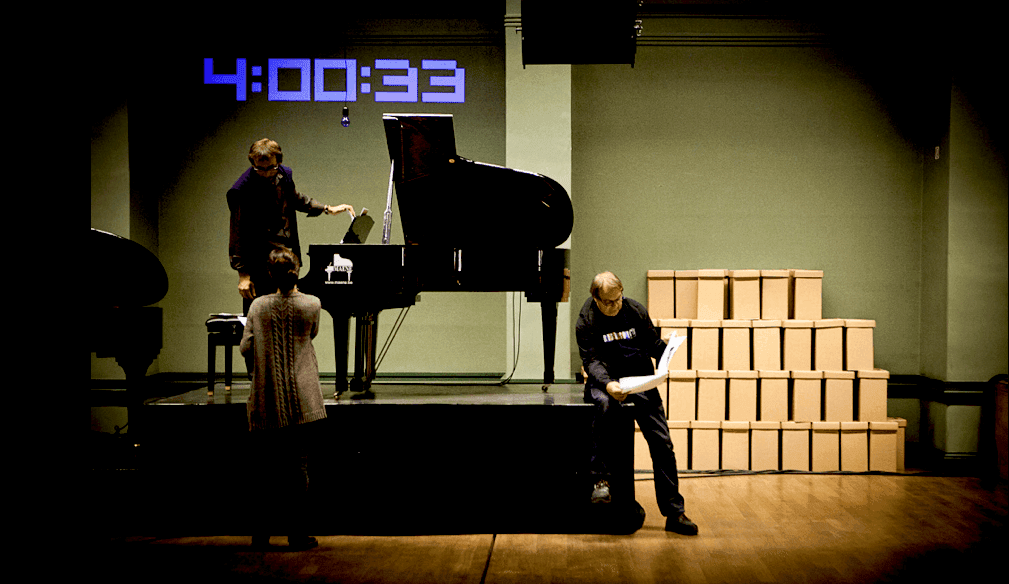
Exactly 4 hours and 33 seconds of music.
In alphabetical order :
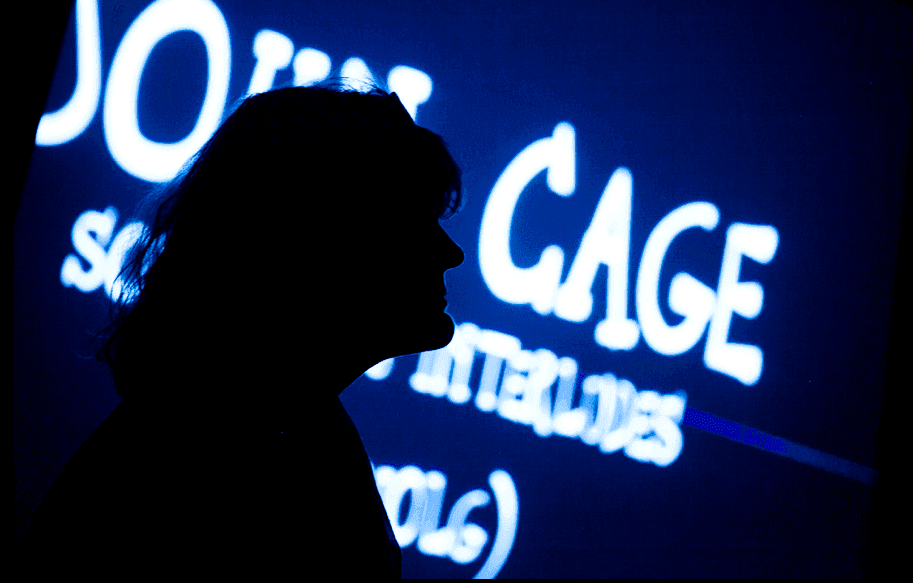
John Cage (1912-1992)
A Flower (1950)
Amores (1943)
Child of Tree (1975)
Credo in Us (1942)
Four Dances (1943-’44)
Imaginary Landscape nr.1 (1939)
Living Room Music (1940)
Nocturne voor viool en piano (1947)
She’s asleep (1943)
Six Melodies (1950)
Sonatas & Interludes (1946-’48) (selection)
The Perilous Night (1943-’44)
Three Dances (1944-’45)
Wonderful Widow of Eighteen Springs (1942)
108, Symphony for large orchestra (on tape) (1991)
Johann Sebastian Bach (1685-1750)
Partita nr. 2 voor viool solo (fragment)
Pierluigi Billone (1960)
Mani.Mono (2007)
Henry Cowell (1897-1965)
Bloemlezing van korte stukken
Morton Feldman (1926-1987)
Last Pieces
Pierre Jodlowski (1971)
Serie C (2011) for prepared piano and tape
Larry Polansky (1945)
Canon #14 ‘Kid Canon’ (2003)
Ensembles of Note (1998)
Erik Satie (1866-1925)
Cinema (muziek voor de film Entr’acte van René Clair )(1924)
Arnold Schönberg (1874-1951)
Gigue uit Suite opus 25 (1923)
Construct 1 – a superimposition
- Morton Feldman: Last Pieces for piano (1959)
- Christian Wolff: Stones, on stones (Prose Collection, 1971)
- Larry Polansky: Songs and Toods for the Lou Harrison National Just
Intonation Resonator Guitar (2005). Tood: 85 Chords («The Historical
Tuning Problem») (for jim tenney) - John Cage: 45’ for a Speaker (1954) (extrait / Auszug)
Eva Reiter: Konter for double bass flute and tape (1988/2009)
Alvin Lucier: Silver Street Car for the Orchestra for amplified triangle (1998)
John Cage: Three Dances for two prepared pianos: N° 1 (1945)
Ukeoirn O’Connor: Three Songs for voice and ukulele
Clinton McCallum: Dance up close to me II for Fender Rhodes and
amplifier operator (2011)
Construct 2 – another superimposition
- Christian Wolff: You Blew It (Prose Collection, 1971)
- Erik Satie: Sports et Divertissements (1914) (extraits / Auszüge)
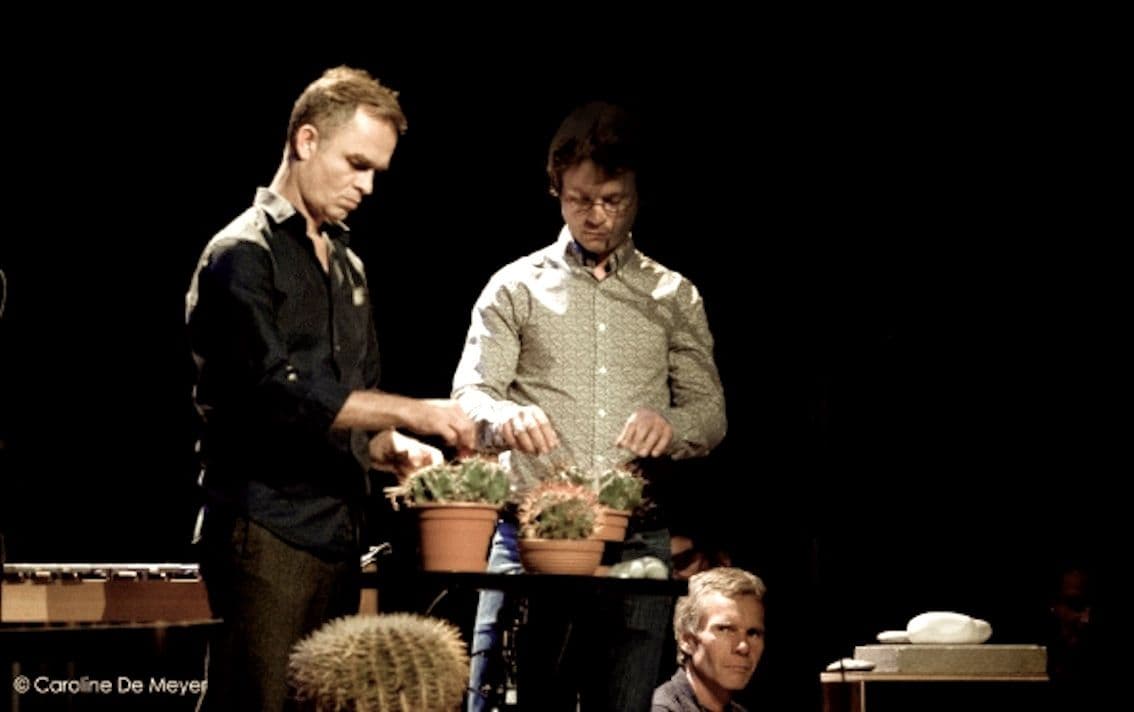
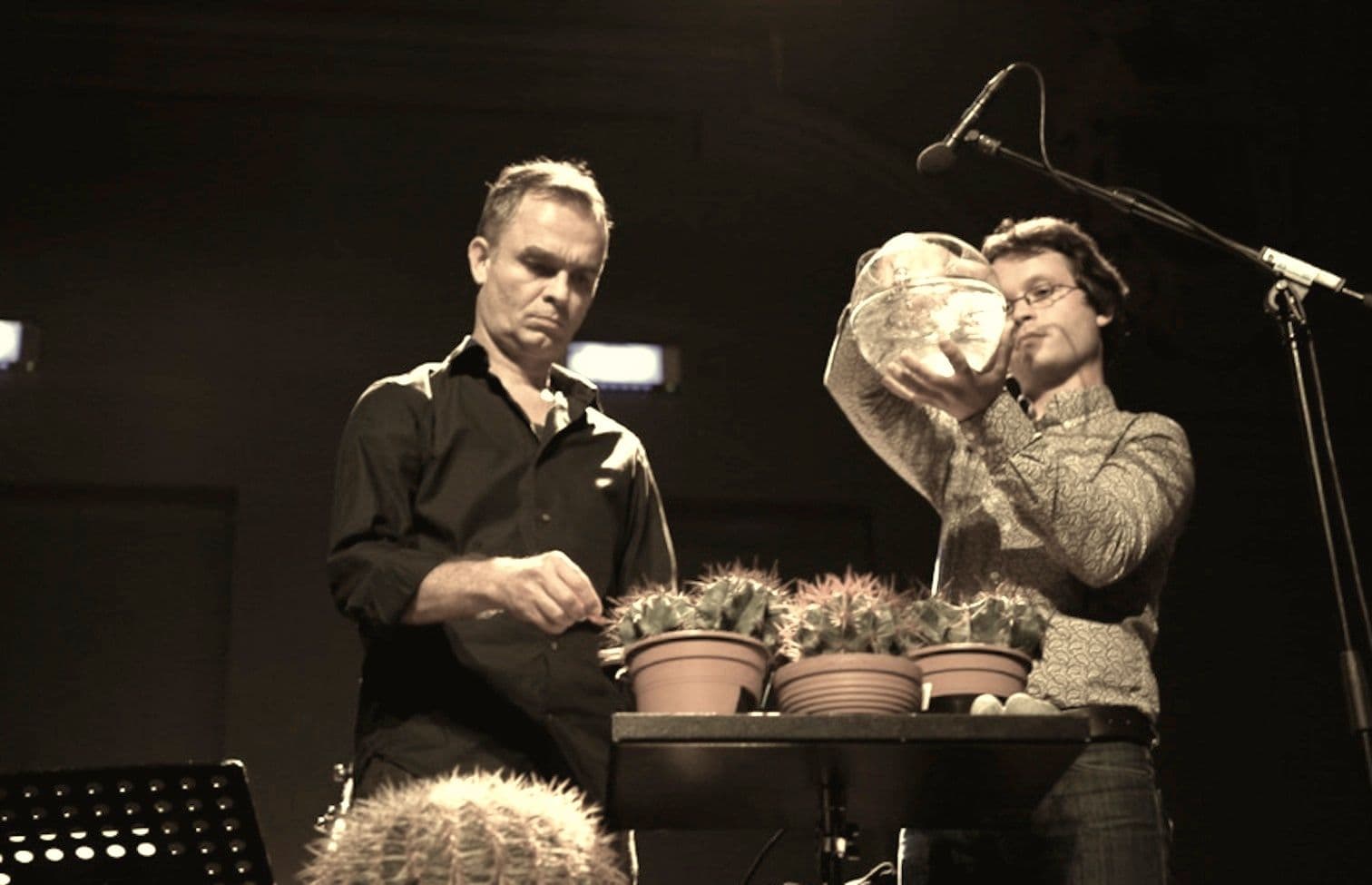
- John Cage: Child of Tree. Cactus music including water and branches (1975)
Kurt Schwitters: Sonate in Urlauten (1932) (extraits / Auszüge)
Anton Webern: Drei kleine Stücke op. 11 für Violoncello und Klavier (1914)
Arnold Schönberg: Suite op. 25 für Klavier: Gigue (1923)
Johann Sebastian Bach: Suite Es‑Dur (mi bémol majeur) BWV 1010
für Violoncello solo: N° 6: Gigue (–1723)
Jennifer Walshe: Historical Documents of the Irish Avant‑Garde Vol. 1: Dada
for voice and DVD (~1921)
John Cage: Radio Music for 5 performers (1956)
Construct 3 – more superimposition
- Morton Feldman: Last Pieces for piano (1959)
+John Cage: Empty Words (on tape) (1978) - Turntable and voice
John Cage: Sonatas and Interludes for prepared piano (1948)
(extraits / Auszüge)
John Cage: The Wonderful Widow of Eighteen Springs
for voice and closed piano (1942)
John Cage: Sonatas and Interludes for prepared piano (1948)
(extraits / Auszüge)
James Tenney: For Ann (rising) for tape (1969)
John Cage: Sonatas and Interludes for prepared piano (1948)
(extraits / Auszüge)
Larry Polansky: Songs and Toods for the Lou Harrison National Just
Intonation Resonator Guitar (2005). Song: Sweet Betsy from Pike
Henry Cowell: Advertisement for piano solo (1917)
Pierluigi Billone: Mani.Mono for spring drum (2007) (extrait / Auszug)
Henry Cowell: Exultation for piano solo (1921)
Henry Cowell: Tides of Manaunaun for piano solo (1917)
Henry Cowell: Anger Dance for piano solo (1914)
John Cage: Child of Tree. Cactus music including water and branches (1975)
John Cage: Three Dances for two prepared pianos: N° 3 (1945)
Jennifer Walshe: Carte Blanche
John Cage: Imaginary Landscape N° 1 for two turntables, piano and cymbal
(1939)
Construct 4 – the last great superimposition
- John Cage: Music for Marcel Duchamp for prepared piano (1947)
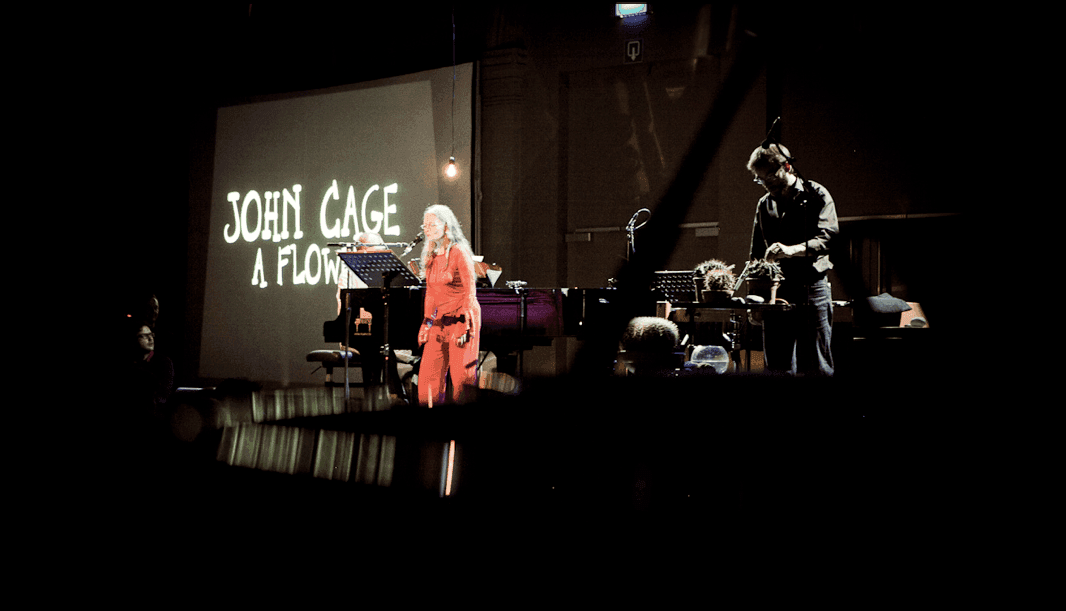
- John Cage: A Flower for voice and closed piano (1950)
(partie piano / Klavierstimme)
180’ ohne Pause
Bar durchgehend geöffnet