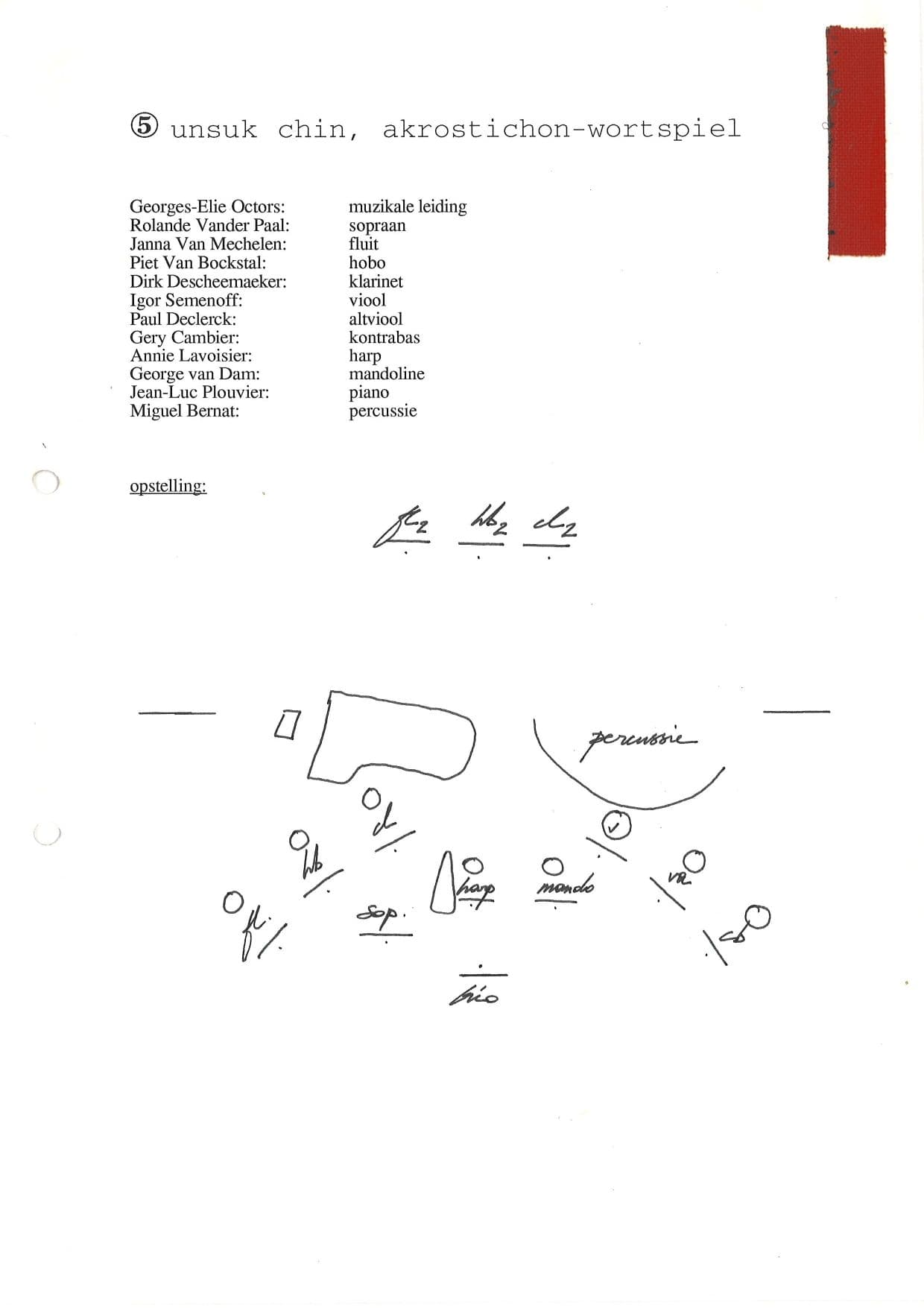
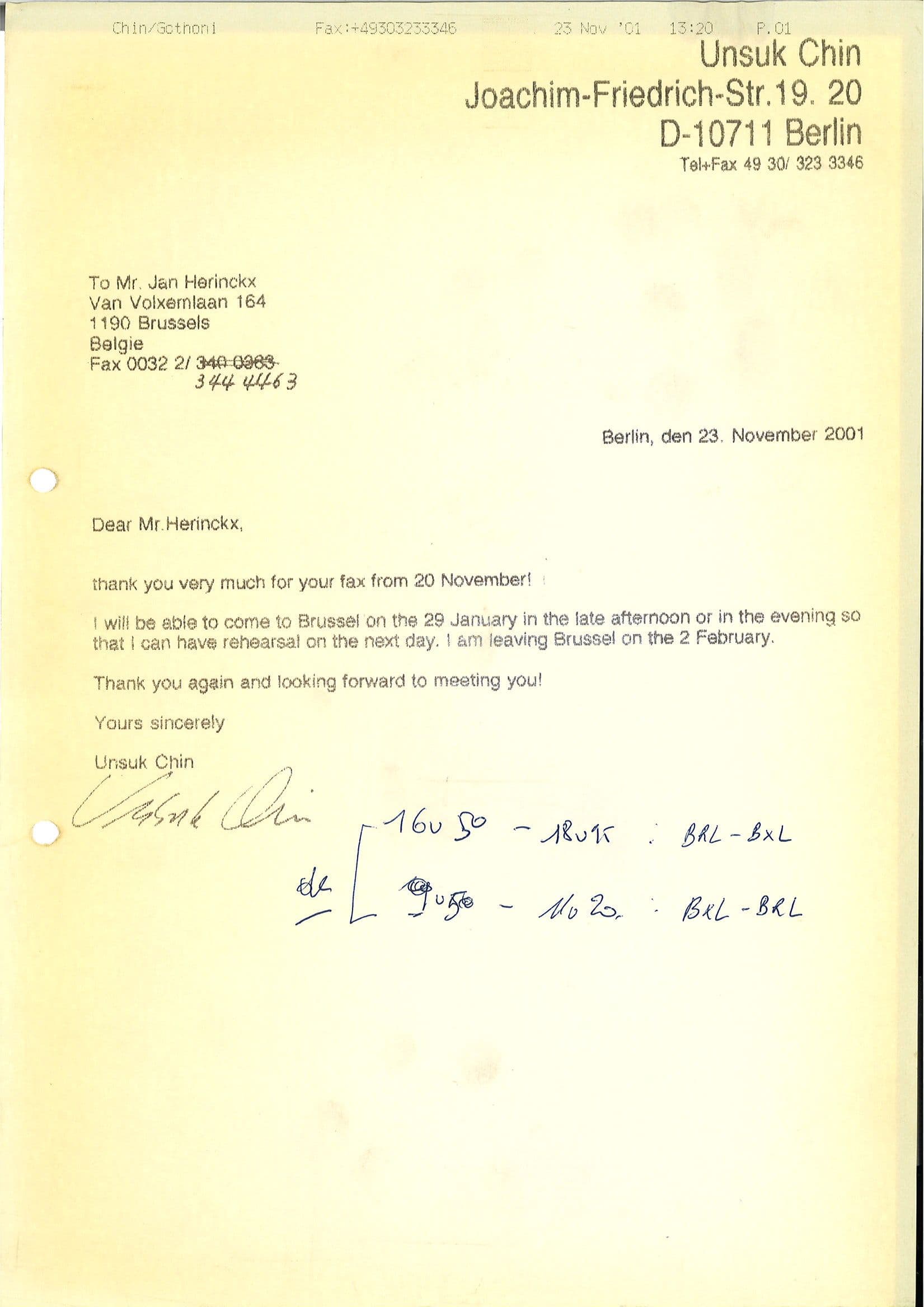
Akrostichon-Wortspiel
GALLERY
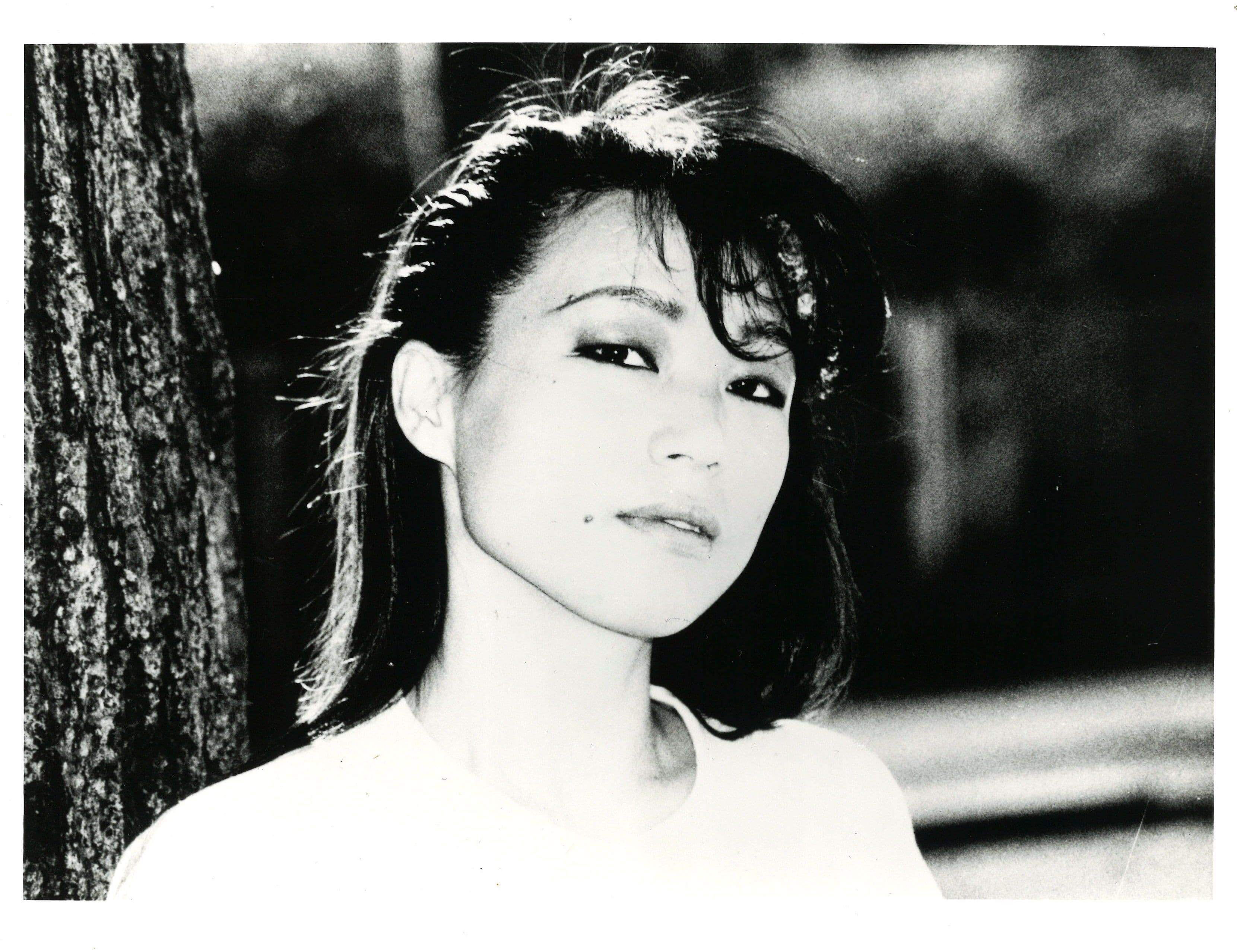
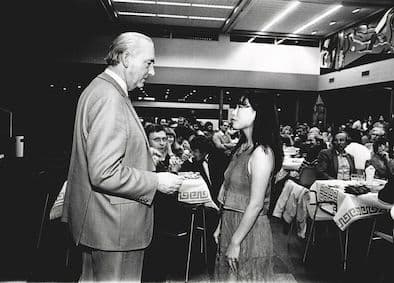
Akrostichon-Wortspiele
Seven scenes from fairy-tales for soprano and ensemble (1991, rev.1993)
The piece was commission by the Gaudeamus Foundation for the 1991 Prizewinner's Concert.
The Ictus performance belonged to a concert series Ongehoord at De Singel in the season of 2001-2002, taking place on February 1st, 2002.
A word from the program booklet of the concert at De Singel
Unsuk Chin already has a number of major works to her name: The Trojan Women (1986) for female voices, choir and orchestra, Santika Ekatala for orchestra (1993), the Piano Concerto (1997) and the recently completed Miroirs des temps (1999) for voices and orchestra. Chin is also a pianist and has performed at the Korean Pan Music Festivals, including her own work (Figuren). She is currently working on a series of Etudes for piano, six of which have already been completed. Since moving to Berlin in 1988, she has discovered the electronic music studios at the Technical University. Unlike many other composers, Chin does not seek to fuse electronic and acoustic music, but allows both worlds to exist independently. Nevertheless, in her acoustic works one can hear that ideas, fields of colour, processes and evolutions are underpinned by her experiences in the world of electronic sound. And this is (in principle only) comparable to the working method of her teacher Ligeti.
In Xi (1998), which for once combines tape and orchestra, she allows an entire sonic cosmos to develop from a few germ cells. Xi is the Korean word for seed and source, nucleus and smallest particle, from which large organisms grow. Translated into musical terminology, Xi evolves from primary cells to the technique of granular synthesis. Unsuk Chin owes her international renown to the numerous performances of Akrostichon-Wortspiel. In this work, she employs a shimmering palette of colours, full of Eastern and feminine elegance. Her music flows very spontaneously, and her free and highly personal approach to harmony is particularly striking. Her preference for setting surrealist texts to music is a trait she inherited from her teacher, Ligeti. Furthermore, her sense of humour in this work is also reminiscent of Ligeti. ‘Akrostichon’ is literally a play on words, letters and sounds, on tonalities that are established and then blurred again, a play on fantastical and pseudo-Oriental atmospheres.
Score fragments
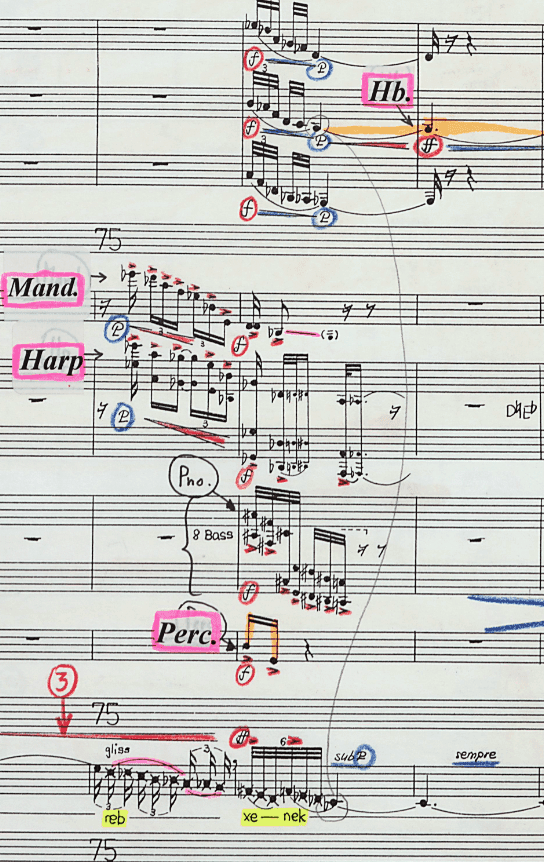
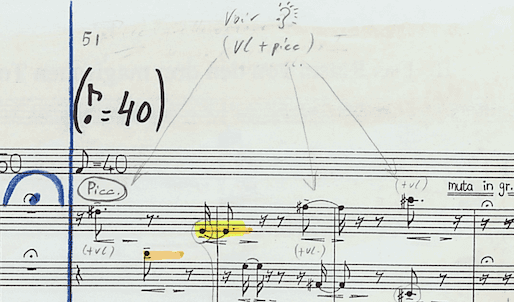
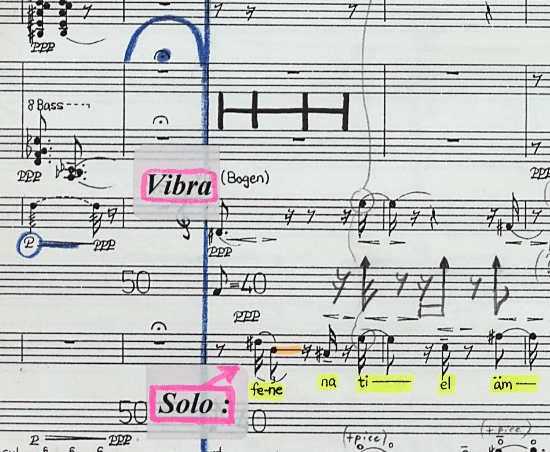
Score Follower video with Georges-Élie Octors' annotated score
Ictus presents sparkling cocktail (an excerpt)
Review by Maarten Beirens in De Standaard (February 4th, 2002)
One of the most agreeable aspects of contemporary music is the variety of what is written. This makes it possible to combine pieces that are in themselves very different but which together yield an interesting and colourful mix, as in this delightful concert by Ictus.
One can of course find points of contact between these works: the absurd touch in the pieces by Unsuk Chin and Johannes Schöllhorn, the sound exploration by György Ligeti and Jonathan Harvey, and of course the fact that the oldest composer in the programme (Ligeti) was the teacher of the youngest (Chin). But each of the works chosen had its own identity and character and set personal accents, and this gave the concert an added value on top of the exemplary performance by Ictus.
The Korean Unsuk Chin was able to charm immediately with his Akrostichon - Wortspiele for soprano and ensemble. The highly varied mixture of timbres reveals Ligeti’s influence and in the last part the elegant arabesques are reminiscent of Claude Vivier, though Chin gives it his own pronounced character. It is above all excellently written, and the way the rarefied heights of the soprano Donatienne Michel-Dansac blended with the fine details of timbre that Ictus provided gave the music an added impact.
Quote
“I received the Gaudeamus Award in 1985, with 24 years, still living in a military dictatorship, with scarcely any exchange with the international music circuit. Being its awardee opened me career opportunities unthinkable by then, and enabled me to move to Europe the same year to study with Ligeti. Back then, there were lots of glass ceilings for composers from minority groups and non-European composers. My overall life in music would probably have taken a very different turn without being awarded this precious prize. The open-mindedness and vision connected to the Gaudeamus Award was an inspiring factor in gaining more self-esteem and in daring to take more risks. In this spirit, I encourage young composers of any gender and from any country to apply and to maintain the ideals of the Gaudeamus Award.”
- Unsuk Chin (2019)
Production